
Navigating Global Health Accords: The WHO Pandemic Treaty, Digital IDs, and Canadian Health Freedom
If you have felt a growing desire to take personal ownership over your daily wellness, you are far from alone. Between discussions of international health accords and digital credentialing, many Canadians are asking valid questions about where centralized governance ends and personal health freedom begins. Understanding how these evolving global frameworks intersect with your everyday bodily autonomy is the first step in building true, self-reliant health.
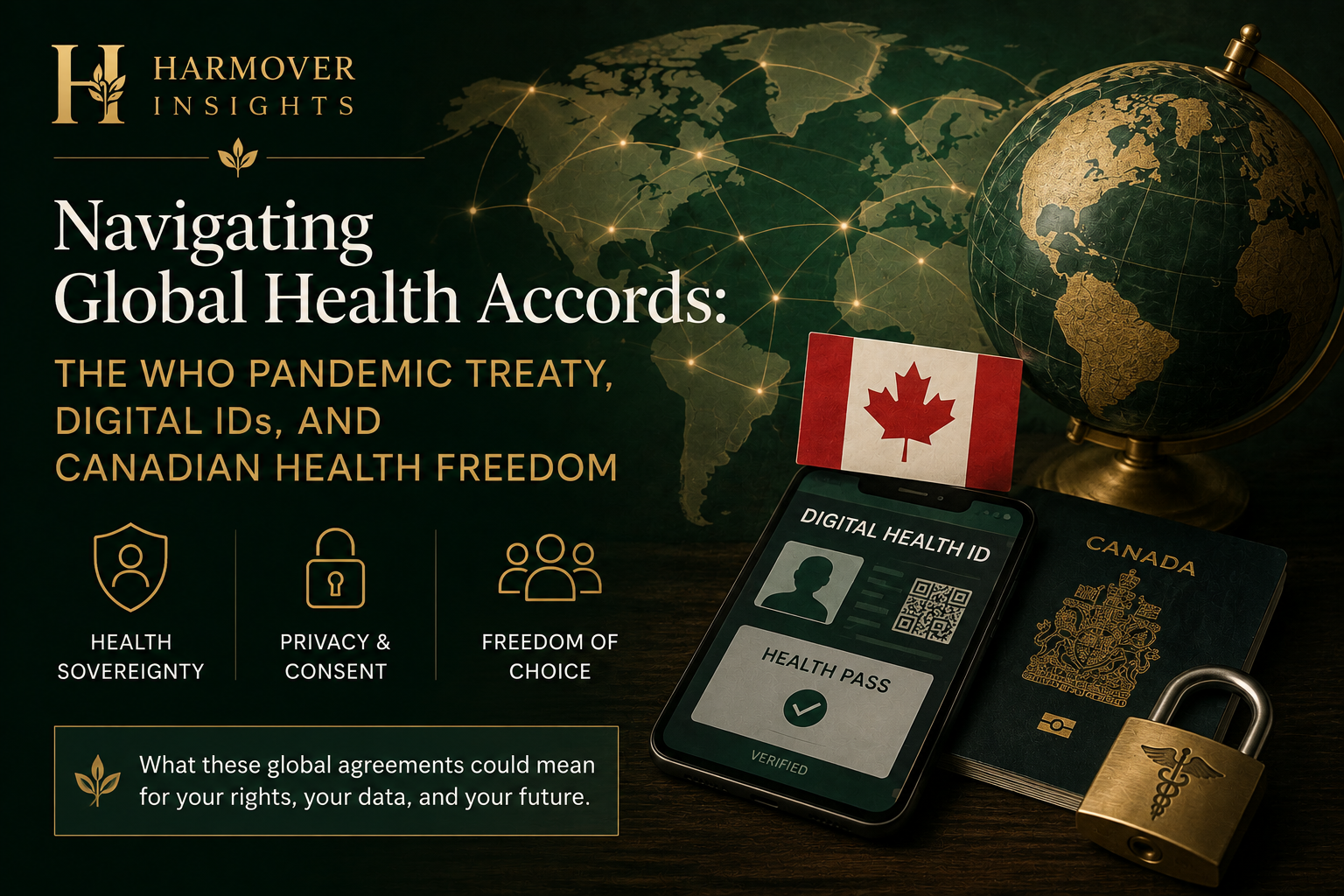
What Are the Proposed WHO Accords and International Health Regulations?
At the center of global health discussions are two primary initiatives led by the World Health Organization: the WHO Pandemic Agreement and updates to the International Health Regulations, usually shortened to the IHR. Broadly speaking, international bodies describe these accords as tools to standardize emergency communication, streamline resource sharing, and build early-warning networks for global outbreaks.
Public policy experts and citizens alike note that centralized directives can sit awkwardly against local context and individual rights. For Canadians, the core question is one of legally binding authority: how much decision-making power remains with national and provincial health authorities, and how much is shaped by international consensus? Current drafts emphasize national sovereignty on paper — and it is worth reading that language for yourself rather than taking anyone's summary of it, including this one. Even so, the broader push toward standardized global protocols understandably raises questions for people who value customized, independent care.
Digital Health Passports and Data Privacy: Where Is Canada Heading?
Alongside international agreements sits the rapid expansion of digital health infrastructure. Frameworks for interoperable digital IDs, verifiable health certificates, and centralized patient databases are increasingly built into administrative planning. Supporters point to administrative efficiency, faster emergency response, and seamless travel verification as the main benefits.
The friction point arrives when data collection touches bodily autonomy. A centralized health record, paired with digital verification tools, creates a system in which access to services or travel could in principle be tied to compliance with specific health directives. In Canada, where provincial privacy laws govern personal medical records, critics highlight that digitized tracking introduces systemic vulnerabilities — both in terms of data breaches and the gradual erosion of informed consent. Genuine informed consent requires a real ability to decline without facing social or financial exclusion.
Understanding the Shift Toward Personal Health Sovereignty
Health sovereignty is not about rejecting medicine. It is about recognizing that your body is ultimately your own jurisdiction. In practical terms, this shift in mindset focuses on building resilience from the ground up rather than relying exclusively on top-down health direction. When you attend to foundational wellness — metabolic health, stress regulation, nutrient-dense food, and a local support network — you place less of your wellbeing in the hands of emergency care models.
Navigating this landscape means staying informed without becoming overwhelmed. While policy debates unfold in national parliaments and international chambers, your most immediate agency remains close to home: what you choose to put into your body, how you look after your personal data, and how you build health independence day by day. None of this is a substitute for professional care, and it is not medical advice — it is the ordinary groundwork that makes you a more active participant in your own health.
True health sovereignty rests on three things: bodily autonomy, informed consent, and robust data privacy. Real personal wellness begins when you hold the ultimate authority over your own day-to-day health decisions.
Foundations Worth Understanding
- Ashwagandha (Withania somnifera) An adaptogenic herb traditionally used to support the body's natural response to environmental and psychological stress. It is thought to help keep cortisol — your main stress hormone — within a steadier daily rhythm, which in turn supports nervous system balance during demanding periods. For many people it serves as a foundational botanical when the goal is to strengthen baseline stress resilience naturally rather than reactively.
- Broad-Spectrum Probiotic Blend A balanced formulation of beneficial bacterial strains intended to support gut microbiome diversity and the integrity of the intestinal wall. Because a large share of immune activity is concentrated in the gut, keeping that microflora balanced supports everyday digestion and wider metabolic health. It is a sensible daily foundation for internal wellness, and pairs naturally with the wider gut health reading on Harmover Insights.
- Vitamin D3 & K2 Complex A pairing of two bioavailable fat-soluble vitamins that together support cellular health, bone density and immune balance. Vitamin D3 is involved in regulating the expression of genes tied to immune function, while Vitamin K2 helps direct calcium toward bone rather than soft tissue. If you are weighing up which strength suits you, our guide to high strength versus daily maintenance Vitamin D3 walks through the difference.
Supplements interact with medicines and with each other, and the right choice depends on your full health picture. Speak with a qualified practitioner before starting anything new — particularly if you are pregnant, breastfeeding, managing a health condition, or taking prescription medication.
Navigating global health policy can feel daunting, but your daily choices remain entirely within your hands. By insisting on informed consent, protecting your privacy, and nurturing your body's natural resilience, you build a foundation of health freedom that stands firm regardless of shifting international headlines. Stay curious, read the primary documents where you can, and give your attention to the decisions that are genuinely yours to make.
- Gostin, L. O., & Meier, B. M., 2022. Global Health Law and the WHO Pandemic Agreement. Journal of Law, Medicine & Ethics, 50(3), 412–421. doi:10.1017/jme.2022.88.
- Sekalala, S., Forman, L., Habibi, R., & Meier, B. M., 2021. Health rights and fossilization of governance: Human rights analysis of the proposed WHO Pandemic Treaty. BMJ Global Health, 6(12), e007876. doi:10.1136/bmjgh-2021-007876.
- Kassen, M., 2022. Digital health identity systems and patient privacy rights in Canada. Canadian Journal of Law and Technology, 20(1), 45–68.
- Taylor, A. L., & Haber, H., 2023. International Health Regulations, national sovereignty, and global health security compliance. International Organization, 77(3), 512–535.
This article is intended for informational and educational purposes only. It does not constitute medical or legal advice and should not be used as a substitute for guidance from a qualified healthcare professional. Individual needs vary — always consult your practitioner before beginning any new supplement protocol. Descriptions of international agreements and regulations reflect the published sources cited above at the time of writing.