
Cancer Research Is Looking Again at Old Medicines. Here's What That Actually Means
Cancer research doesn't always begin with a brand-new molecule. Sometimes researchers return to medicines that have been used for years for entirely different conditions and ask whether they might have another role. One of the most talked-about examples has now reached clinical testing, and it's worth understanding exactly what that does and doesn't mean.
Why Researchers Revisit Old Medicines
Developing a new cancer drug from scratch can take more than a decade and cost enormous sums. So researchers are increasingly asking whether medicines we already have could help. This approach is called drug repurposing — taking an existing, approved medicine and studying it for a condition it was never originally intended to treat.
It has a real track record. Common medicines such as aspirin and metformin have both been studied for possible roles in cancer, and some older drugs have found genuine new uses in other areas of medicine. Repurposed medicines are attractive to researchers because they're often inexpensive and already well studied for their original purpose.
One medicine attracting particular attention is ivermectin, an anti-parasitic drug used for decades to treat conditions such as river blindness and scabies. Its discovery won the Nobel Prize in 2015. Laboratory studies have suggested it may affect cancer cells in several ways, and some research suggests it could help the immune system respond to tumours.
What the Evidence Can and Can't Tell Us
It's easy for promising early research to be presented as more than it is, so it helps to understand the different kinds of evidence.
Laboratory findings are not proof of clinical benefit. Many substances kill cancer cells in a dish, including some that would be harmful or useless in the body. Animal evidence is not proof of benefit in people either, because a treatment that works in mice often behaves differently in humans. An ongoing clinical trial is not evidence that a treatment works — it means researchers think the question is worth testing. And a trial testing a combination of drugs doesn't establish the effect of any one of them on its own.
Safety works the same way. A medicine's safety record for its original use is based on approved doses, often taken briefly. That tells us little about its safety at the doses being explored in cancer research, when combined with other cancer drugs, or in people already coping with cancer and its treatment.
- Laboratory research Ongoing
- Human clinical research Early stage
- Established cancer treatment No
- Trial results proving benefit Not currently available
- Studied alongside existing therapy Yes
What One Current Trial Is Actually Testing
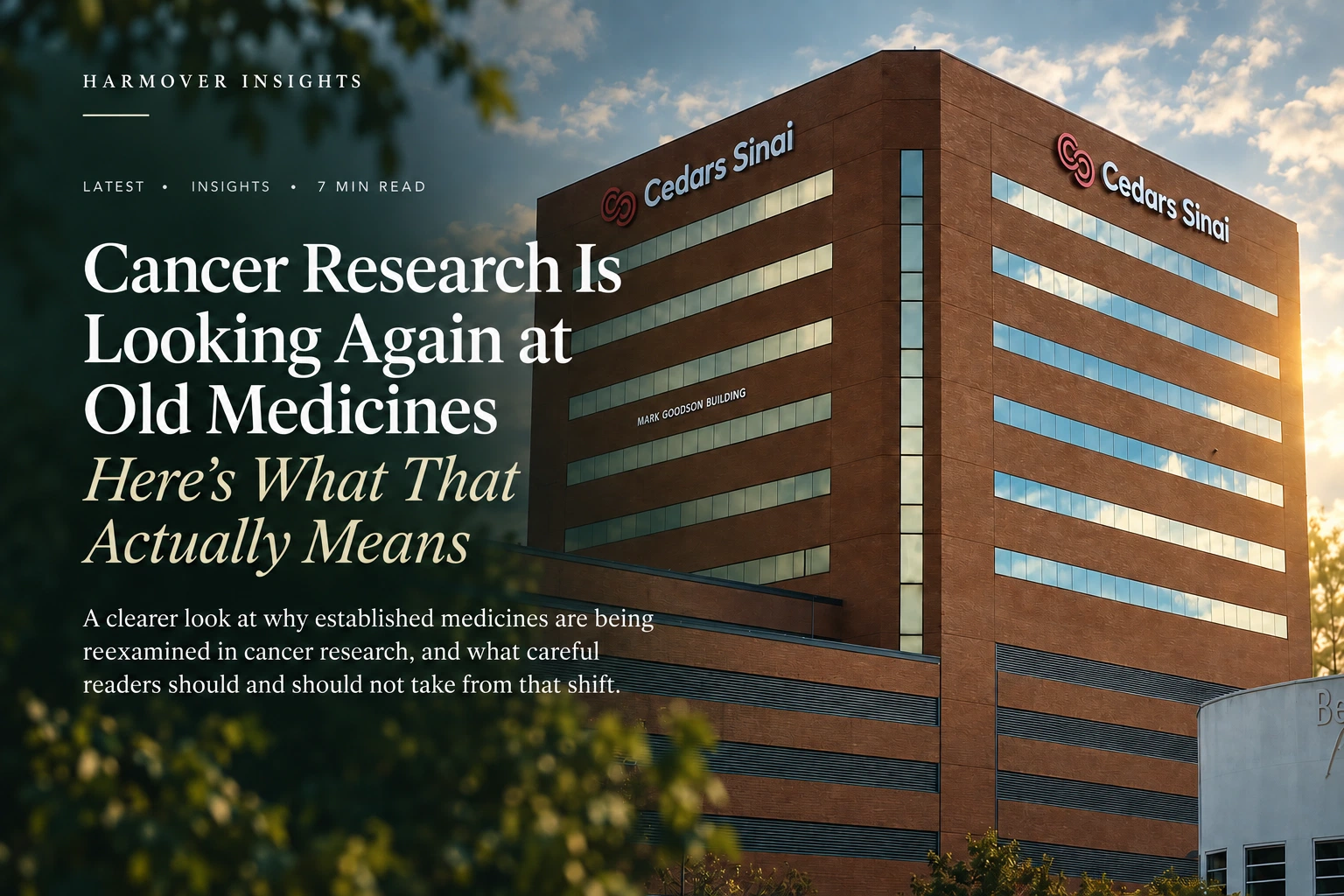
The most advanced study of ivermectin in cancer is at Cedars-Sinai Medical Center in Los Angeles. It's a phase I/II trial — an early-stage study focused mainly on safety, the right dose and early signs of benefit. It aims to enrol around 34 patients with triple-negative breast cancer that has spread to other parts of the body.
Patients receive ivermectin together with an immunotherapy drug, either balstilimab or pembrolizumab. These medicines help the immune system attack cancer. Cedars-Sinai notes that ivermectin's use in the study is considered experimental.
This design reflects the research question. Laboratory work suggests ivermectin might help the immune system respond to tumours, so the researchers want to know whether adding it to immunotherapy is safe and whether the combination works better. Patients with advanced cancer also need active treatment, so testing an experimental drug alone would raise ethical concerns.
That tells us what the trial can and can't answer. If the results are positive, they would suggest ivermectin may be a useful addition to immunotherapy for this type of breast cancer. They wouldn't show that ivermectin works on its own or for other cancers. The trial is still recruiting, and no results have been posted.
The medicines being studied
- Ivermectin An anti-parasitic medicine approved for conditions such as river blindness and scabies. Laboratory studies suggest it may affect cancer cells and support the immune response to tumours, which is why it's now being tested in early clinical trials alongside immunotherapy. It is not an approved cancer treatment, and its use in this research is experimental.
- Immune checkpoint inhibitors Immunotherapy drugs that help the body's immune system recognise and attack cancer cells. Pembrolizumab is an approved cancer treatment; balstilimab is still investigational. In the Cedars-Sinai trial, ivermectin is being tested in combination with these drugs, not as a replacement for them.
Researchers are studying whether an older medicine may have a role alongside established cancer therapies. The study is still underway, so it can't yet tell us whether the medicine improves patient outcomes.
Why Early Cancer Trials Start Small
If you're hoping for answers, a study of 34 people can feel frustratingly small. There's a good reason for it.
Early-stage trials usually focus on safety, the right dose and preliminary signs that a treatment might help. Only if those results are promising does a treatment move on to larger trials, which compare it against the best existing care in hundreds or thousands of patients. That later stage is what normally shows whether a treatment genuinely improves outcomes.
Starting small protects patients. When a medicine is being tested in a new way, it's safer to begin with a small group under close monitoring before exposing larger numbers of people to unknown risks. It also means the existence of a trial is the start of the evidence process, not a verdict.
Why Repurposed Medicines Can Be Difficult to Study
There are real structural challenges in researching older medicines, and they're worth understanding.
Most new cancer drugs are tested by the companies that own them, which can expect to recover the cost of large trials through years of exclusive sales. Older, off-patent medicines don't offer that protection. Anyone can make and sell them, so there's much less commercial incentive for a company to fund expensive trials.
That means repurposing research often depends on academic institutions, charities and public funding. This is one reason Florida's recent decision to allocate state funding for cancer research into repurposed generic drugs, with ivermectin named as an example, has attracted attention.
It's reasonable to ask questions about this system. Who funds repurposing research? How are negative results published? How transparent are trial plans? These questions have answers you can check. Clinical trials are registered publicly on ClinicalTrials.gov, where anyone can see a study's design, its planned outcomes and, in many cases, its results. US law requires many trials of approved drugs to report results within a set time after they finish. Weak incentives can slow research down, but that's different from evidence that successful treatments are being hidden, and it's important not to confuse the two.
Why This Research Is Worth Watching
Serious questions deserve serious testing. For years, many patients and families have shared stories of hope about ivermectin and other repurposed medicines. Stories like these can generate ideas worth investigating, and some of medicine's most important discoveries began exactly that way.
But it's controlled studies that decide whether those ideas hold up. The fact that this question has moved from laboratory discussion into a clinical trial is genuinely noteworthy. Whatever the results show, patients will be better off knowing the answer.
Repurposed medicines deserve to be investigated when there's a credible scientific reason to do so. Current research involving ivermectin is noteworthy because the question has moved from laboratory discussion into clinical testing. But that's the beginning of the evidence process, not the end of it. What matters now is what the trials actually show, and we'll keep following the research as it develops.
- Cedars-Sinai Medical Center, 2022–present. A Phase I/II Study Evaluating the Safety and Efficacy of Ivermectin in Combination With Immune Checkpoint Inhibitor in Patients With Metastatic Triple Negative Breast Cancer. ClinicalTrials.gov NCT05318469. Available at: https://clinicaltrials.gov/study/NCT05318469
- Cedars-Sinai Medical Center. Ivermectin and Balstilimab in Metastatic Triple Negative Breast Cancer, trial information page. Available at: https://clinicaltrials.cedars-sinai.edu/view/IIT2022-07-YUAN-IB-TNBC
- Florida Department of Health, 2025. Florida Cancer Innovation Fund, funding opportunity announcement.
- Florida Phoenix, 2025. Ivermectin, from the Capitol to state-funded cancer research. 24 September. Available at: https://floridaphoenix.com/2025/09/24/ivermectin-from-the-capitol-to-state-funded-cancer-research-its-a-thing-in-florida/
- US Food and Drug Administration. Why You Should Not Use Ivermectin to Treat or Prevent COVID-19 (includes overdose and interaction warnings).
- ClinicalTrials.gov. FDAAA 801 and the Final Rule (results reporting requirements). Available at: https://clinicaltrials.gov
This article is intended for informational and educational purposes only. It discusses emerging research and does not recommend any medicine for cancer treatment. Experimental uses should not replace established cancer care or decisions made with a qualified oncology team. Descriptions of trials and funding decisions reflect the published sources cited above at the time of writing, and research of this kind changes as new results are reported. Always consult your own practitioner or oncology team before acting on anything you read here.